
Reviewed: 8 August 2026 · AJMI Smart Technology Technical Team
IPTV performance depends on installed cabling quality
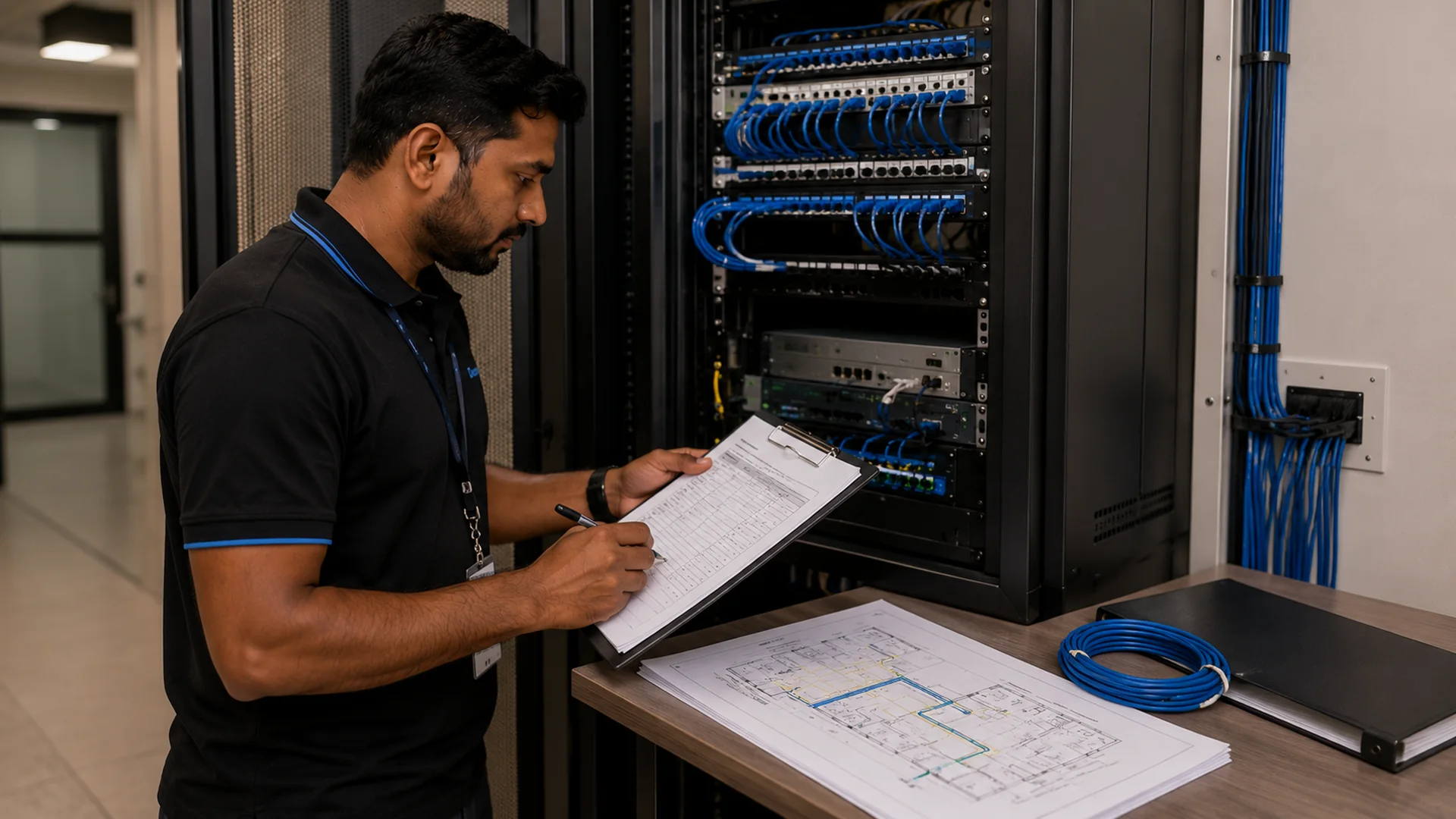
IPTV endpoints need verified copper or fibre paths, labelled patching, suitable switch locations and documented test results. Cable category, distance, bend radius, termination, segregation and spare capacity should support multicast television traffic and future screen growth. Review AJMI IPTV system integration and IPTV applications across industries for related project scope.
The network outcome behind Structured cabling for IPTV systems in Saudi Arabia
Coordinate pathways, copper categories, fibre, racks, labelling and certification before connected systems arrive. The purpose is to translate structured cabling into a buildable scope rather than a product list. For Saudi hotels, compounds and facilities, the right answer depends on the site, the operational model, the existing infrastructure and the support expected after handover.
Confirm approved pathways and outlet schedule before design
Begin with approved pathways and outlet schedule. Record quantities, locations, current assets, service expectations, interfaces and constraints. A survey should separate confirmed facts from assumptions, because unverified assumptions usually return later as variation, delay or performance risk.
Architecture: copper, fibre, racks, patching and labels
The technical scope should show copper, fibre, racks, patching and labels. It should also state who supplies, configures, tests and supports every interface. AJMI works as a Saudi technical service provider and system integrator, selecting compatible multi-brand products for the project; Macvision is an important IPTV middleware technology partner where that platform fits the requirement.
Commissioning evidence: certification results and as-built schedules
Installation quality includes routes, containment, terminations, rack layout, power, labels and configuration control. Commissioning must prove certification results and as-built schedules. Results should be recorded against rooms, outlets, devices or zones so the owner can see what was tested and what remains open.
Performance risks in Structured cabling for IPTV systems in Saudi Arabia
Risks specific to Structured cabling for IPTV systems in Saudi Arabia include incorrect quantities, unsupported interfaces, unverified legacy equipment, unclear ownership and acceptance without measurable test evidence. A representative-area test is especially important where compatibility or live operation is critical.
Documentation and operation of Structured cabling for IPTV systems in Saudi Arabia
A complete handover normally includes as-built drawings, asset and licence records, configuration backups, test sheets, warranties, operating guidance and escalation contacts. Preventive maintenance and AMC scope should follow system criticality, not a generic visit count. This makes structured cabling easier to operate, troubleshoot and expand.
Decision checklist for Structured cabling for IPTV systems in Saudi Arabia
- Confirm the business outcome expected from structured cabling, not only the preferred equipment.
- Verify approved pathways and outlet schedule and mark every quantity that still depends on a site survey.
- Ask the proposal to identify copper, fibre, racks, patching and labels and every third-party interface.
- Agree how the team will demonstrate certification results and as-built schedules during commissioning.
- Separate initial supply, installation, licences, optional work, warranty and AMC so lifecycle cost is visible.
Project information needed for Structured cabling for IPTV systems in Saudi Arabia
Provide the project location, facility type, room or endpoint count, available drawings, current system details, target completion date and operating restrictions. Add photographs of racks and representative outlets when available. State whether the work is new construction, replacement, expansion or fault correction. Better input produces a more defensible scope and prevents a low headline rate from hiding missing infrastructure, licences, testing or support.
Questions project teams ask about Structured cabling for IPTV systems in Saudi Arabia
Who should approve the requirements for structured cabling for IPTV?
To define structured cabling for IPTV, confirm the facility type, room or screen count, channel sources, existing headend, TV or STB models, network topology, VLAN and multicast readiness, required middleware functions and support expectations. These details expose compatibility work before pricing.
How should structured cabling for IPTV be described in the technical proposal?
The proposal should describe structured cabling for IPTV through channel sources, headend and middleware scope, endpoint compatibility, network responsibilities, licences, installation, testing, handover records, warranty and optional AMC. Confirmed quantities, assumptions and exclusions must be visible.
Does visual inspection alone prove completion of structured cabling for IPTV?
Completion evidence for structured cabling for IPTV should include recorded tests of the channel path, middleware functions, network behaviour and representative TV or STB endpoints. Approved configurations, closed snags, backups and handover documents should accompany the results.
Can AJMI support structured cabling for IPTV across compatible multi-brand systems?
AJMI is a Saudi multi-brand technical service provider and system integrator. Products for structured cabling for IPTV are selected by compatibility, project requirements, supportability and lifecycle needs. Macvision remains an important IPTV middleware technology partner when that platform suits the project.
Related AJMI services for Structured cabling for IPTV systems in Saudi Arabia
Review the related AJMI service and Saudi service coverage. These pages describe capability and coverage; final design, quantities and rates require verified project information.
Back to Blog